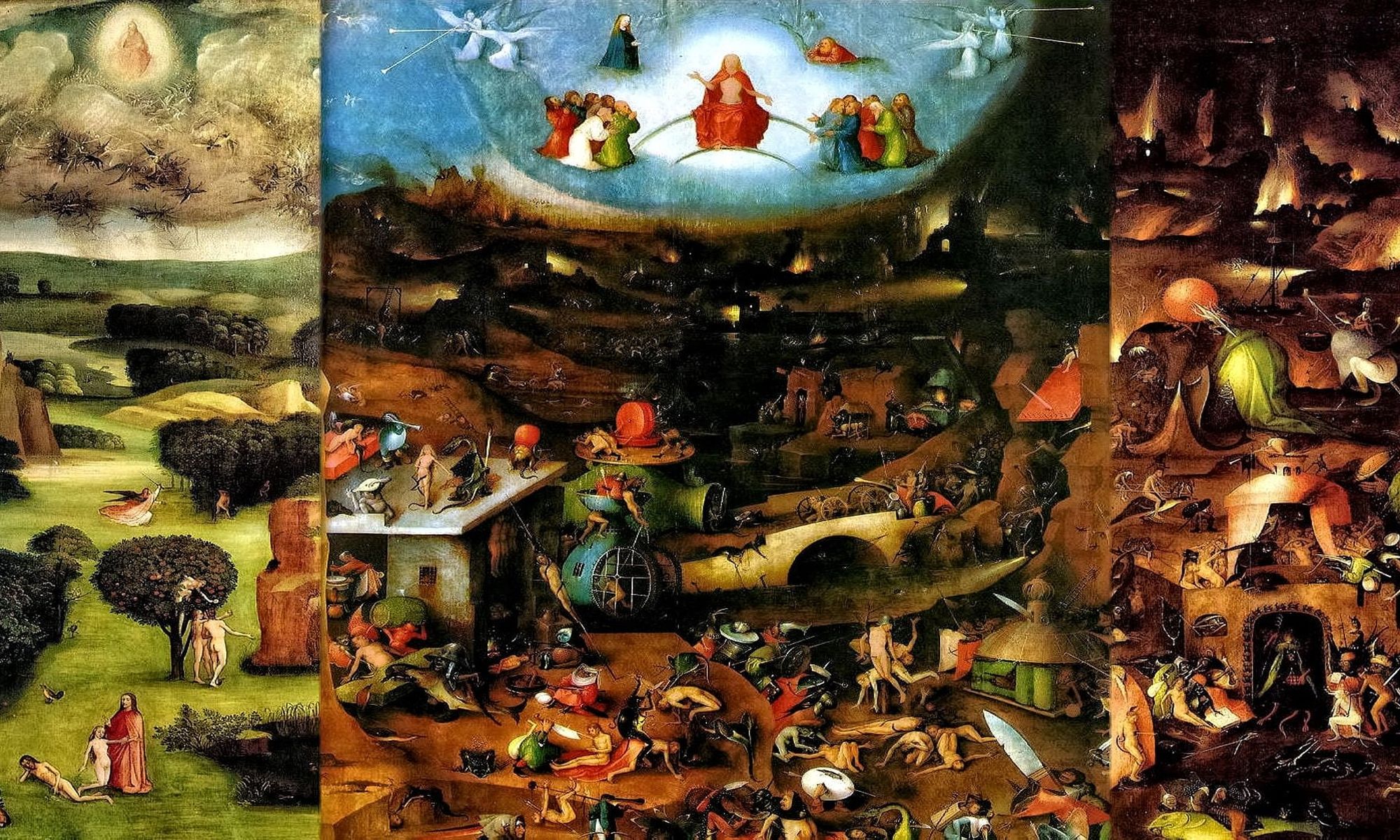

(The scene: A battered, communal hall in a nameless Balkan town. The air is thick with smoke and old hatreds. A mix of Croats, Serbs, and others sit separated by an invisible line of tension. A man, JOE, in his late 40s with a face carved by past wars, steps onto a low stage. He doesn’t shout. He speaks with a weary, burning certainty.)

JOE: Look at you. A roomful of ghosts. You’re not even looking at each other. You’re looking at the ghosts sitting next to you, the ghosts you brought in from ‘91, ‘92, ‘95. You see a uniform. A badge. A patch on a field you lost. I see men who can’t sleep. Fathers who can’t explain to their sons what it was for. Brothers who drank from the same bottle before they sighted down a barrel at each other.
They told us our war was eternal. That the hate was in the soil, in the blood. They wrote our history book with a knife and said it was holy.
But I ask you… who sold us the knife?
(He lets the silence hang, walking slowly along the divide.)
I saw a film once. An old one. Braveheart. There’s a battle. The English king brings Irish soldiers to fight the Scots. They stand there, on that muddy field, these Irishmen, tools of an empire, facing men who just wanted their own dirt, their own sky. And in that moment… the Irish saw it. They weren’t fighting the Scots. They were fighting for the empire that occupied their own home. They were fighting their own mirror.
So they turned. They broke ranks. They chose a new side. Their own side.
(He stops, looking from one side of the room to the other.)
We have been the Irish on that field. For thirty years. Croats, Serbs, Bosniaks—we have been pointing our guns at the mirror, while the men who sold us the guns, the men who drew the maps that made us enemies, they sit in distant capitals. Washington. Moscow. They don’t speak our language, but they own the translators in our parliaments. They own the voices on our TVs.
Our politicians… our leaders? They are not ours. They are clerks. They take orders from the CIA and the KGB—or whatever they call themselves now. One side dresses them in the flag of the West, the other whispers old songs of the East. And we kill each other for their geography homework.
Enough.
It is time to do the “sin” of the Irish army. It is time to turn.
We do not need to love each other. God knows, that is asking too much of hearts as scarred as ours. But we can hate the same thing. We can recognize the same jailer.
We must become the William Wallace of our own Balkans! Not a man—an idea! The idea that a Croat’s sovereignty and a Serb’s sovereignty die by the same hand! The idea that the only empire we should serve is the empire of our own mountains, our own coast, our own streets!
So I am not asking you to be brothers. I am asking you to be accomplices. Accomplices in the great crime of taking back what is ours. We will not raise an army against each other. We will raise a conspiracy against them. Against their agents in our government, their microphones in our ministries, their money in our banks.
Let them watch their compromised puppets fall, one by one, left and right, and wonder what happened. Let them see a united front of spite against their influence. A Croat and a Serb, standing shoulder to shoulder, not in love, but in perfect, furious agreement: Get off our turf.
We will not give them a war they understand. We will give them a peace they cannot control. A Balkans that is finally, truly, and only… Balkan.
So who is with me? Will you die forever as the Irish army for their empires? Or will you live, just once, as the Irish who turned?
(Joe stands still, offering no hand, making no plea. He simply presents the choice, his gaze a challenge to every man in the room. The only sound is the heavy weight of history, beginning, slowly, to crack.)*